Integrating Notebook and Pen Line Art into Your Creative Workflow
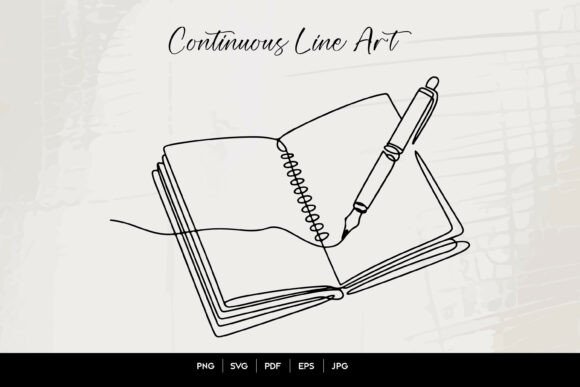
In a digital age dominated by high-resolution photography and complex 3D rendering, the simplicity of Notebook and Pen Line Art offers a distinct advantage for professionals and creators alike. This aesthetic, characterized by clean continuous lines, minimalist outlines, and monochrome contours, is more than just a visual style; it is a functional asset that bridges the gap between analog planning and digital execution. Whether you are an entrepreneur designing a brand identity, an educator creating study materials, or a freelancer organizing a workspace, understanding how to leverage this specific type of vector illustration can streamline your production process and enhance the clarity of your communication.
The Role of Minimalist Line Art in Modern Design Systems
Notebook and Pen Line Art fits into the broader design ecosystem as a foundational element that prioritizes clarity over decoration. Unlike detailed sketches or heavily shaded illustrations, line art relies on the precision of the stroke to define form. This makes it exceptionally versatile for various file formats, including PNG, SVG, EPS, PDF, and JPG. The ability to scale these images without losing quality—particularly when using vector formats like SVG and EPS—is critical for workflows that require assets to be used across multiple mediums, from small mobile app icons to large-scale wall art posters.
For professionals managing a brand's visual identity, consistency is paramount. A notebook and pen motif rendered in a simple, modern outline style ensures that the imagery remains legible even when reduced to a favicon or printed on business cards. The monochrome nature of these graphics allows them to adapt seamlessly to different color palettes, making them ideal for templates, planners, and stationery designs where the background color might change frequently. By adopting this minimalist approach, designers reduce cognitive load for their audience, allowing the core message of productivity, education, or creativity to take center stage.
Strategic Implementation Across Project Phases
The utility of Notebook and Pen Line Art extends beyond the final output; it plays a significant role throughout the lifecycle of a project. In the preparation phase, these visuals serve as effective placeholders and mood board elements. When pitching a concept for a new educational platform or a productivity app, using a clean contour illustration of a journal and writing instrument immediately establishes the context of learning and organization without the distraction of extraneous details.
During the execution phase, these assets become integral components of user interfaces and marketing collateral. For instance, a blogger creating a guide on time management might use a continuous lineart depiction of a planner to break up text and visually reinforce the topic. Similarly, a small business owner designing a "welcome" packet for new clients could incorporate a hand-drawn sketch of a desk setup to create a warm, approachable atmosphere. The aesthetic of being "handdrawn" yet perfectly executed suggests a human touch, which is often a key differentiator in competitive markets.
Post-project, these graphics remain valuable for archiving and repurposing content. Because they are available in high-quality formats like PDF and EPS, they can be easily integrated into annual reports, presentation slides, or print-on-demand merchandise. The longevity of this style means that materials created today will not appear dated in a few years, protecting the investment made in the design process.
Optimizing File Formats for Specific Use Cases
One of the most practical aspects of working with Notebook and Pen Line Art is selecting the correct file format for the intended application. Understanding the technical specifications ensures that the artwork performs well within your specific workflow.
- SVG (Scalable Vector Graphics): Ideal for web development and responsive design. If you are building a website for a stationery shop or an online course platform, SVG files ensure that the line art remains crisp on any screen resolution. They also allow for CSS manipulation, enabling dynamic interactions like hover effects that trace the outline of the pen or notebook.
- EPS and PDF: These are the standards for professional printing. When producing physical goods such as journals, planners, or office posters, these formats preserve the vector data necessary for high-definition offset or large-format printing. They ensure that the fine lines of the contour do not blur or pixelate during the press run.
- PNG: Best for digital overlays, social media posts, and email newsletters. With transparent backgrounds, PNG versions of notebook and pen illustrations can be placed over colored headers or textured backgrounds without awkward white boxes, maintaining a cohesive look in digital communications.
- JPG: Suitable for quick previews, blog post thumbnails, or situations where file size is a primary constraint. While not ideal for further editing, JPGs are universally compatible and easy to share with stakeholders who need a quick visual reference.
Choosing the right format at the start of the process prevents bottlenecks later. For example, attempting to upscale a low-resolution JPG for a billboard results in poor quality, whereas starting with an EPS file guarantees scalability. This foresight is a hallmark of efficient project management.
Enhancing Productivity and Workspace Aesthetics
Beyond digital applications, Notebook and Pen Line Art has a tangible impact on physical workspaces. The psychology of environment plays a crucial role in productivity. Incorporating these minimalist graphics into desk setups, through printed wall art or custom stationery, can subtly influence focus and motivation. The imagery of a pen and notebook acts as a constant visual cue for the act of creation and planning.
For educators and students, these visuals simplify complex concepts. A worksheet featuring a clean outline of a diary can encourage students to visualize the act of journaling as a structured, manageable task rather than a daunting one. In corporate settings, using this aesthetic in training manuals or internal memos conveys a sense of order and professionalism. It signals that the organization values clear thinking and structured documentation.
Furthermore, the "aesthetic" appeal of black and white line art aligns with current trends in interior design for home offices and co-working spaces. It complements both industrial and Scandinavian design styles, making it a safe and sophisticated choice for branding personal workspaces. When individuals curate their environment with intentional design elements, they often report higher levels of engagement and satisfaction with their daily tasks.
Ensuring Quality Control and Long-Term Usability
To maximize the value of Notebook and Pen Line Art, attention must be paid to quality control during the selection and integration process. Not all line art is created equal; the thickness of the strokes, the smoothness of the curves, and the balance of negative space all contribute to the overall effectiveness of the image.
When sourcing or creating these assets, verify that the lines are continuous and free of jagged edges, especially if the goal is a "continuous lineart" effect. Inconsistencies in stroke weight can disrupt the visual flow and make the design appear amateurish. Additionally, ensure that the artwork is truly scalable. Test the vectors by zooming in to 600% to check for artifacts or broken paths before committing to a large print run or a high-traffic web deployment.
Organization is another key factor. Establish a systematic naming convention for your files (e.g., notebook_pen_lineart_svg_v1) and store them in a centralized asset library accessible to your team. This reduces the time spent searching for resources and ensures that everyone is using the most up-to-date version of the graphic. Consistency in usage across all platforms reinforces brand recognition and creates a unified experience for your audience.
Practical Integration Strategies for Creators
Integrating Notebook and Pen Line Art into your routine requires a strategic approach. Start by auditing your current visual assets. Identify areas where cluttered or overly complex images might be detracting from your message. Replace these with simpler, outline-based illustrations where appropriate. For example, swap a busy stock photo of a messy desk for a clean vector illustration of a pen and notebook in your next presentation slide.
Consider the narrative you want to tell. If your goal is to inspire action, the directness of line art works well to cut through noise. If you are documenting a process, use sequential line drawings to illustrate steps clearly. Collaborate with developers or printers early in the process to confirm format requirements, ensuring that the transition from design to delivery is seamless.
Finally, embrace the versatility of the medium. Do not limit yourself to traditional uses. Experiment with layering these graphics over textures, combining them with typography, or animating the lines for video content. The inherent simplicity of Notebook and Pen Line Art provides a blank canvas for innovation, allowing you to maintain a professional standard while exploring creative new directions. By treating these graphics as essential tools rather than mere decorations, you unlock their full potential to support your goals, enhance your workflow, and communicate your vision with precision.